
The government on Thursday more than doubled the price of natural gas that is used to produce electricity, make fertilisers, turned into CNG and piped to household kitchens for cooking, on the back of a spike in global energy prices. The price of gas produced from old regulated fields, such as the nation's largest gas field of Bassein of ONGC, will rise to a record high of $6.10 per million British thermal unit (mmBtu) from the current $2.90 per mmBtu, according to the oil ministry's Petroleum Planning and Analysis Cell (PPAC). The new price, which is likely to result in a hike in CNG and piped cooking gas rates, will be for six months beginning April 1.

As many as six of eight core industries saw a contraction in output in October.

Infrastructure accounts for nearly 38 per cent of India's industrial output

The output of eight core industries increased 4.2 per cent in April, boosted by higher electricity, fertiliser and cement production.

IIP is expected to post a subdued volume growth in February 2017

India's crude oil production fell 2.3 per cent in August but natural gas output rose by more than a fifth on the back of output from KG-D6 fields of Reliance-BP, government data released on Wednesday showed. Crude oil production dropped to 2.51 million tonnes in August as output from fields operated by state-owned Oil and Natural Gas Corp (ONGC) dipped. India is 85 per cent dependent on imports to meet its oil needs and the government has been for long looking at ways to raise the domestic output so as to reduce import dependence.

Better living conditions must be an integral part of all political campaigns. But this will only happen if the public pressures the political class to understand the irreversibility of climate change and make the environment a crucial part of their manifestos.
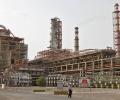
The growth rate of eight infrastructure sectors of coal, crude oil, natural gas, refinery products, fertilisers, steel, cement and electricity was 5.7 per cent in January 2016.

These core industries comprise 40.27 per cent of the weight of items included in the Index of Industrial Production.

India imported goods worth $4.23 billion in June from sanctions-hit Russia, up 6.8 times as compared to last year, as demand for shipments of crude oil grew at the fastest pace during the month. Crude oil worth $3.02 billion was imported in June, which translates into a share of 71 per cent of the total imports from Russia, commerce and industry ministry data showed. Similarly, during the April-June quarter, India's imports from Russia were valued at $9.27 billion, up 369 per cent on year.

As stringent sanctions imposed by the European Union and US are crippling business and trade, desperate Russian oil companies are offering huge discounts to India, provided a payment mechanism to bypass the SWIFT ban is quickly approved by the government. According to sources familiar with the development, Russian oil firms are offering 25-27 per cent discount to the dated Brent crude prices. State-run Rosneft is one the biggest oil companies that supply crude to India.

She also took a swipe at the Bharatiya Janata Party over its defeat in the just-concluded Himachal Pradesh assembly elections, saying the ruling party's president could not hold on to his home state. "Who is the Pappu now?" she asked.

The growth rate in September too was 3.2%.

India's crude oil production fell 2.15 per cent in October as state-owned firms produced less but, natural gas output rose by a quarter on the back of output from KG-D6 fields of Reliance-BP, government data released on Tuesday showed. Crude oil production dropped to 2.51 million tonnes in October, as output from fields operated by Oil and Natural Gas Corp (ONGC) and Oil India Ltd (OIL) dipped. While ONGC produced 4 per cent less crude oil at 1.64 million tonnes, OIL output dropped 1.46 per cent to 2,53,000 tonnes.

On the back of rising crude oil purchases, India's bill for imports from sanctions-hit Russia jumped 3.5 times in a year in April to $2.3 billion, showed data from the commerce ministry. In April, India's crude oil imports from Russia were valued at $1.3 billion, 57 per cent of India's total inbound shipments from Russia. Other major imported items during the month included coal, soybean and sunflower oil, fertilisers, and non-industrial diamonds. That month, Russia was also the fourth-largest crude petroleum supplier to India, after Iraq, Saudi Arabia, and the United Arab Emirates (UAE).

Crude oil, fertiliser and cement recorded negative growth

The Union Cabinet on Thursday approved a revision in the formula for pricing of natural gas and imposed cap or ceiling price to help cut CNG and piped cooking gas prices by up to 10 per cent. Natural gas produced from legacy or old fields, known as APM gas, will now be indexed to the price of imported crude oil instead of benchmarking it to gas prices in four surplus nations such as the US, Canada and Russia, Union I&B Miniser Anurag Thakur told reporters after a meeting of the Cabinet. APM gas will be priced at 10 per cent of the price of basket of crude oil that India imports (Indian basket of crude oil).

Ajit Balakrishnan offers lessons from another tech revolution not so long ago.

Billionaire Mukesh Ambani's Reliance Industries has signed a pact to invest an undisclosed amount in a giant petrochemical hub being built in the UAE. The oil-to-telecom conglomerate will join the recently-formed Ta'ziz joint venture of Abu Dhabi state energy giant Adnoc and state holding company ADQ for developing the Ruwais Derivatives Park in western Abu Dhabi. A company statement said an agreement has been signed for Reliance to invest in the project but did not give details. Unconfirmed reports put the investment at about $1.5 billion.

RIL and its partners BP plc of UK and Canada's Niko Resources plan to produce about 13 million standard cubic metres per day of gas for 13 years from D-34 discovery, known as R-Cluster, in the KG-DWN-98/3 or KG-D6 block by 2017-18.

'80% of the rural and urban population don't have enough purchasing power.'

Slow growth in key sectors would also have implications on the Index of Industrial Production number

Shashi Tharoor has also been retained as the chairman of the panel on Information Technology.

Russian traders have started asking for payments in ruble for their exports to India in a move that could derail trade between the two countries which gathered pace after the war in Europe. This is because Indian importers are unable to pay in ruble. The India-Russia trade gathered pace after Vladimir Putin invaded Ukraine in February this year. In the April-June quarter, India's imports from Russia were valued at $9.27 billion, up 369 per cent year on year.

Reliance Industries has signed agreements with nine fertiliser and power companies for gas sales from its field in the Krishna-Godavari basin over the past three months. India's largest private sector company has signed memorandums of understanding with Nagarjuna Fertilisers, GVK Industries, Konaseema Power (all in Andhra Pradesh), Kribhco, Chambal Fertilisers, Iffco, Torrent Power (all in Gujarat), Tata Power and Rashtriya Chemicals & Fertilisers in Maharashtra.

Natural gas output rose by 6.4 per cent in June.

'Nirmalaji must consider herself a very lucky finance minister, partly because of the government's response to covid and partly because we as a nation have done very well as an economy, post pandemic.'
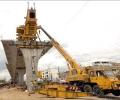
The eight core industries -- fertilisers, cement, steel, electricity, crude oil, coal, petroleum refinery products and natural gas -- have a combined weight of about 38 per cent in the Index of Industrial Production.

Cement production contracted by 2.7 per cent as against an expansion of 6.2 per cent in October 2016.
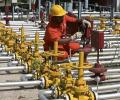
The government on Thursday hiked by 62 per cent the price of natural gas that is used to produce electricity, make fertilisers and turned into CNG to use as fuel in automobiles and cooking gas for household kitchens. This is the first increase in rates since April 2019 and comes on back of firming benchmark international prices but does not reflect the spurt in spot or current price of liquefied natural gas (LNG) witnessed during the last couple of weeks. The oil ministry's Petroleum Planning and Analysis Cell (PPAC) said the rates paid for gas produced from fields given to state-owned Oil and Natural Gas Corporation (ONGC) and Oil India Ltd (OIL) will be $2.90 per million British thermal unit for the six-month period beginning April 1.

The growth in key sectors will have implications for the Index of Industrial Production as these eight segments account for about 41 per cent of the total factory output.

IT, FMCG and manufacturing sectors are less attractive to foreign portfolio investors

With natural gas and cement showing decline in production, the growth of eight core infrastructure industries slowed down to 5.3 per cent in May against 7.4 per cent a year ago.
As many as seven of eight core industries saw a contraction in output in September.

The output had expanded 1.8 per cent year-on-year in January.

The expansion in September is highest since April, when the core sectors' growth stood at 2.6 per cent.

Influential Patel community leader Parshottam Rupala, minister in the first Narendra Modi government Mansukh Mandaviya and three-time MP Darshana Jardosh, all from Gujarat, were among those inducted in the Union cabinet on Wednesday.
Investors and companies should brace for higher commodity prices over the next few weeks in the backdrop of Russian troops attacking Ukraine on Thursday. Meanwhile, US President Joe Biden threatened new sanctions against Russia for an act of aggression against Ukraine. All this, analysts believe, can push prices of key commodities such as crude oil, ammonia, urea, potash, and phosphates higher.

As the economic crisis in Sri Lanka - the world's largest exporter of orthodox tea - continues to rage across the island nation, tea producers in India look to cash in on the opportunity to seize the market. The country's largest tea growing company, McLeod Russel India, expects orders to come in from July. "A huge opportunity is coming up for everyone in India. "McLeod Russel is well placed because we have the capacity for orthodox tea," said Azam Monem, director, McLeod Russel. About 10 per cent of McLeod's production is orthodox tea.

In October 2015, the sectors had witnessed a growth of 3.2 per cent.
